
⚠️ SECURITY WARNING: Do NOT send money to libicks@aol.com (INACTIVE since 2014). Official payments ONLY via Store checkout or treasurer@nbrc.org ⠀•⠀ ⚠️ SECURITY WARNING: Do NOT send money to libicks@aol.com (INACTIVE since 2014). Official payments ONLY via Store checkout or treasurer@nbrc.org ⠀•⠀ ⚠️ SECURITY WARNING: Do NOT send money to libicks@aol.com (INACTIVE since 2014). Official payments ONLY via Store checkout or treasurer@nbrc.org ⠀•⠀ ⚠️ SECURITY WARNING: Do NOT send money to libicks@aol.com (INACTIVE since 2014). Official payments ONLY via Store checkout or treasurer@nbrc.org ⠀•⠀

Color Basics

Mark’s Notes on Roller Inheritance

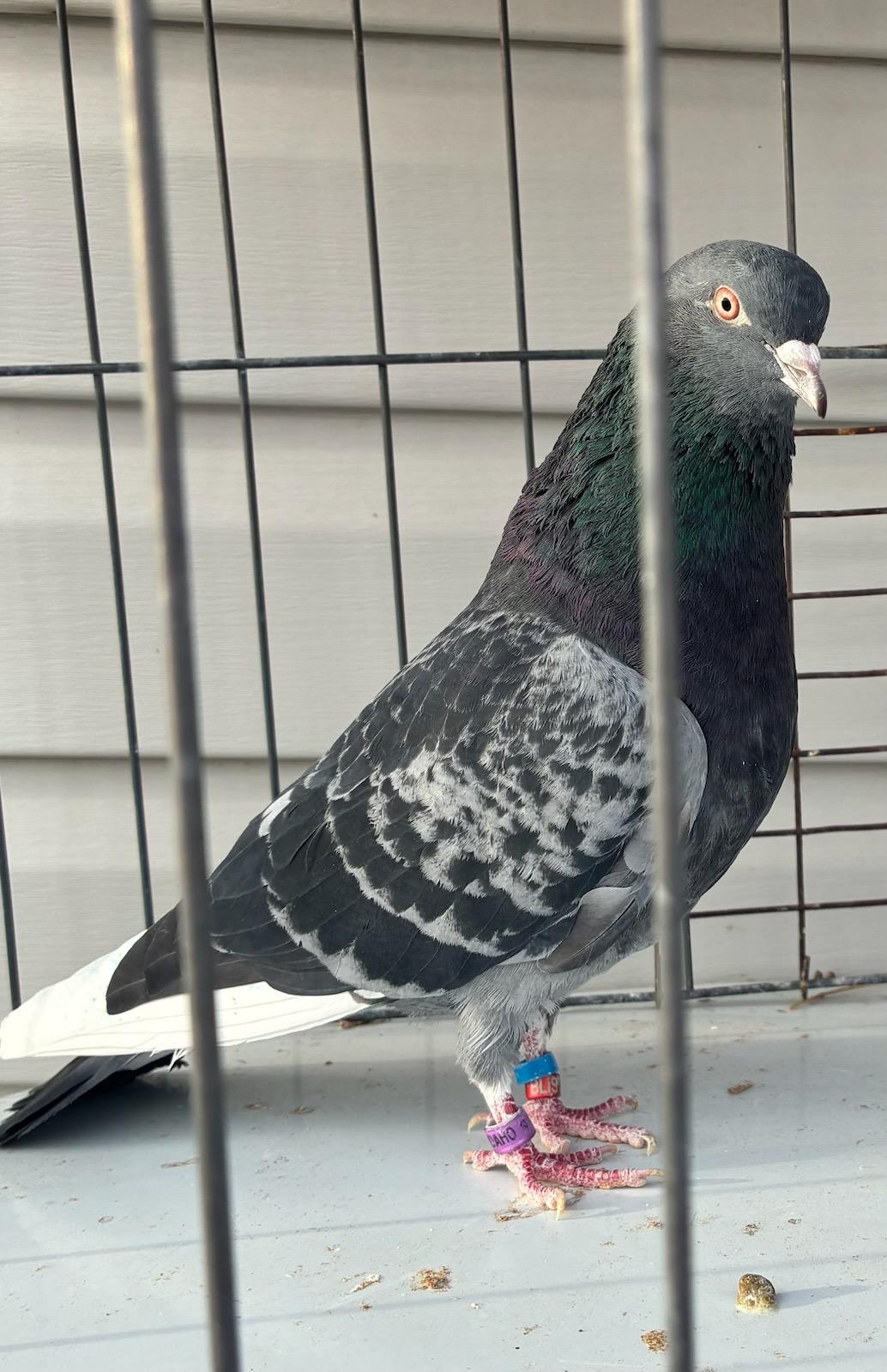
There is some really good information on pigeon genetics on the Web but it is much more than I needed.  Focusing on Rollers I’ve extracted the information that I need to keep the colors and patterns going in my loft.

When I gave Dwight Madsen my flock of young birds he mated them different than I did and the young I received back were predominately white grizzled birds and only one recessive red mottle.  My original Westfall Jaconettes had most of the common colors and patterns except for brown and any dilute. So, you can understand my confusion at seeing mostly white birds and it made me wonder what had happened.   

Later visiting Bob Westfall’s loft, I noticed the high percentage of black white-sided birds resulting from the heavy use of a pair of outstanding nestmates.    Again, looking at the old breeders there were most of the common colors and patterns but most of the younger birds were blacks with white sides and heavy pied markings.

These two things started me to looking at the genetics behind the colors and patterns. As a post-script – from the research putting this together I now understand that Dwight used the heavily grizzled birds and covered everything up with grizzled whites, so the colors and patterns are probably still there.

In an attempt to make this section manageable the information has been spread across several pages to aid in “load time” on slower devices. There are many pictures to illustrate points and that severely impacted the time it took to load when it was all on this page.

The Sections are:

The Base Colors

Patterns

Masking Factors

Tortoise Shell

Kite

Almond

Selfs

Breeding Result Expectations

Sex-Linkage

Touhoua Yang has also shared his document explaining color genetics in rollers.

For more information you may want to visit these sites. They are not specific to roller pigeons but will allow you to explore the genetics in-depth.

Frank Mosca’s site on genetics.

Robert Miller’s Pigeon Color Genetics Simplified
University of Utah – Pigeon Breeding – Genetics at Work

Mumtaztic Pigeon Loft – Pigeon Genetics

More Posts

Portable Lofts

MY HOBBIE IN ROLLER PIGEONS  By Joe Stayer  I have been in the Pigeon hobby since September of 1942. Over the years I have tried many different loft designs in order to fly my birds. My favorite is the Mobile Loft that I have at this time.  When I was young very few people I knew had knowledge of pigeons. ‘I got my start from getting pigeons from the barns at St. Bonaventure University campus when I was very young. They had their own animals for food supply. A priest there had a garage full of pigeons and they strayed off and made nests in the barns. I used to go there at night and get pigeons sitting on the rafters. In one of the flocks I noticed a strange bird that flew in the air and it turned over backward. It was very interesting to see them in the air flying.  Over the years I was away from the pigeons. I married and spent two years in the army as a truck mechanic in Orleans, France. I often told my wife that someday I was going to raise pigeons when we bought our first home. On December 31, 1957 we bought a home with a beautiful 34 acre lot and a nice place to fly pigeons. In January of 1958 I met a man who gave me 3 American Pigeon Journal magazines. I needed stock and I learned first hand I needed to write letters or to travel, as there wasn’t anyone who lived

Read More »

Share:

Send Us A Message