
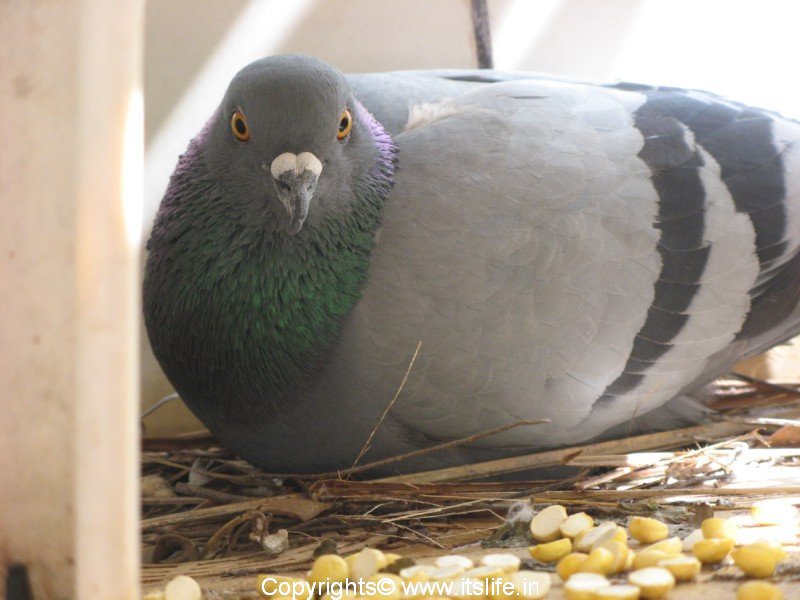
Taken from pigeon insider.
Tricks for Pigeon Foster Parenting
 Trick 1:
If you have a pair where the hen has stopped laying eggs due to any kind of reason, know that you can use this pair as foster parents. A pair which has been trying to get some babies of their own, and never managed to, would be extremely happy to find some eggs in their bowl. To be on the safe side, give the pair two plastic eggs, and soon enough both parents will be incubating, then after a day or two, replace the plastic eggs with real eggs. The parents will produce pigeon milk, and raise the youngsters successfully. I have done this quite some times with two hens who stopped laying eggs.
Note: I have also successfully made these pairs foster babies. The way I did this was to give them plastic eggs for two days, then replace the eggs with 6 days old babies. These pairs accepted the babies and raised them successfully.
Pairs who are not able to have any babies of their own can be very useful in case of emergency. For example if a parent is lost, you can in most cases move the babies to the foster pair.
Trick 2:
If you would like to foster the babies of a super pair, but no foster parents have laid any eggs yet, you can try a different approach. Let the pair incubate their babies themselves, then move these babies to the foster parents when they are ready. The way its done is like this:
- Pair A lays eggs, but pair B has still not laid.
- Pair A has now 10 days old eggs, but pair B has still no eggs.
- Pair A now has 12 days old eggs, and finally pair B lays too.
- Now replace the eggs of pair B with plastic eggs.
- Six days after pair B laid their eggs, Pair A has already hatched two babies.
- Wait till the babies are 5-6 days old and the parents are no longer feeding them pigeon milk, but instead giving them normal grains.
- Now replace the plastic eggs of pair B, with the babies, and watch carefully. (A good time to do this is about an hour before feeding time)
- The pair will look confused for a while, but soon accept the babies as their own, they might even feed the babies right away.
- Now feed your breeders, and the new parents (Pair B) will hopefully eat and go feed the babies just like all the other pairs are doing.
This way you can still save some time, as pair A will start on another round as soon as you move the babies. I have fostered babies to pairs who were sitting on only two days old eggs, as long as both foster parents have had at least one turn on the eggs, they will accept the babies.
Trick 3:
Experienced pairs, especially hens (Experienced – have fostered some rounds of babies in their life) can be given other eggs to foster even if they dont have any eggs of their own. Lets say we have an old pair, and we just paired them up again, two days later our super pair A lays two eggs, but pair B has still not laid. You can give your Pair A eggs to pair B, and the hen will accept them as her own. If she has still not started to produce her own eggs, she might not even lay eggs of her own, but to be on the safer side its better to mark the eggs from Pair A, so that even if the hen from pair B does lay, you can throw them away.
These tricks require you to be a bit careful, and know what you are doing. You have to be careful the first few days, to make sure the babies are being fed, and that the pairs are sitting on the eggs. That’s why its best to do this when you know that you are going to be around and will be watching the birds for a few hours. If a hen sits on the eggs for an hour or two without moving away, you can be pretty sure that she accepted them. You can also test by removing the hen from the nest, and let the cock sit for a while.
The same thing applies to babies, be sure you are there to see the parents feed the babies at least once before you consider things to be safe.
I have tested all these methods, and know that they work. Hope they are helpful to you.

 and then