
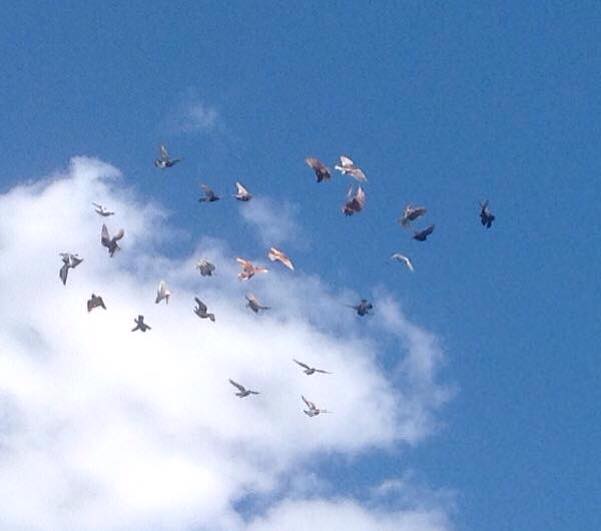
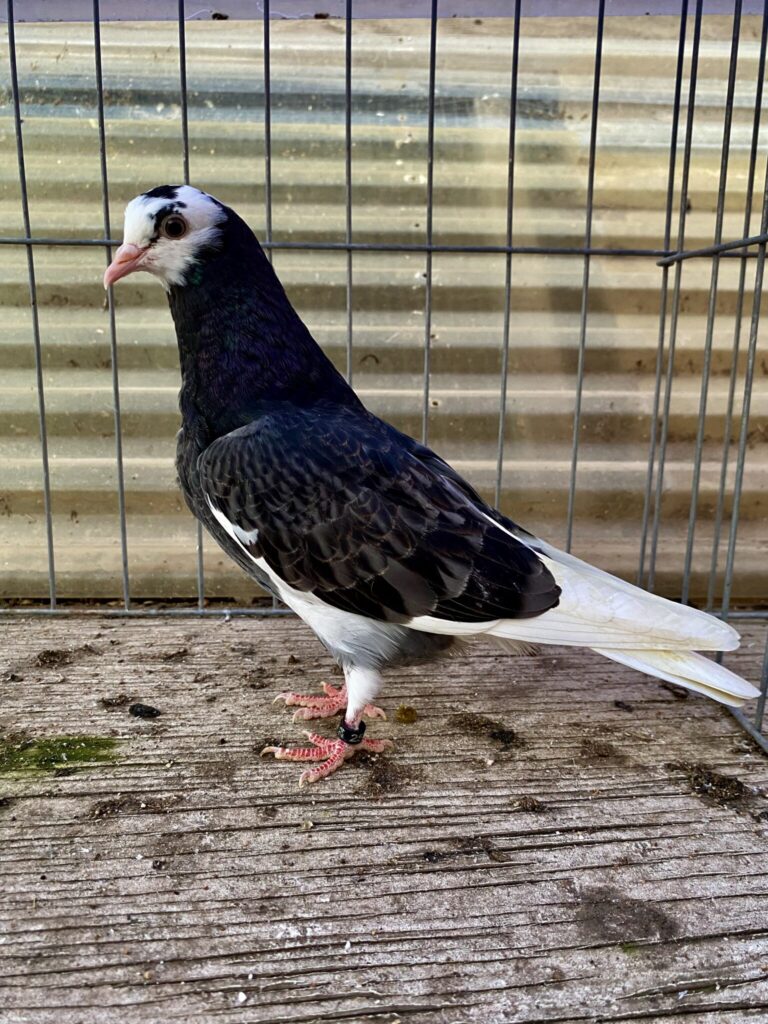
With the exception of Yellow Rollers I know of no topic that incites more arguments than the use of rolldowns. Here we have an interesting article by Tom Monson.
The Value Of Rolldowns
I have a different view of “rolldowns.” The way I see it, every roller is a potential rolldown. It all depends on the stress imposed on the pigeon, such as the act of railing them down until they have what Monty liked to call “hatchet keels.” Some families of rollers are hotter or deeper than others. If you look at your rollers the way I tend to look at mine, nearly all are potential rolldowns. I don’t care if your bird came into the roll at two months or two years, whether it never bumped in its life, or bumps routinely on exiting the loft. Some rollers never rolldown only because they’ve been fed like racing homers their entire lives. Others may be seldom and not particularly deep, but if you stress them a little too much, they can be banging down all over the place.
Hans Roettenbacher: “More than half of your breeding stock every year after you start should be yearlings. (Sure I’ve heard that you should fly them for two years before breeding them. It’s nonsense. Why take ten years to accomplish an evolutionary development that you could cover in five? You ain’t gonna live forever. Neither are your birds.)”
It’s commonplace in the competitions to find that some birds that have never before rolled down or had kitting problems, show these weaknesses when flown on competition day, after the owner has applied a little stress to the birds, in hopes of generating more performance on the day of judging. These birds usually have not shown weakness previously. The owner is sometimes mystified to witness his birds behave this way, exclaiming, “That bird is NEVER out of the kit! She has never done this before!”
I had a black badge hen a few years ago that looked like a cock. I saw her roll with great velocity and style a few times while she was a yearling. I put her in the stock loft for a couple of rounds each year after her yearling year, then returned her to the kit. She rolled 25-30 feet, no more. Then one year, when she was about five years old, something must have happened to her, because she began rolling more often, and often rolled about 50′. I could hardly believe it. She flew hat entire season, and was often scary when the kit was flying low. She rolled down into the bushes about a dozen times that year. The next year, she went back to rolling 25-30′, less frequently, and with more control. She never bumped again. There was no indication that she had been sick that year when she rolled deep and frequently; nor was she fed any differently than the years previous or afterward.
So, I guess I don’t take these rolldown claims seriously. I prefer to say that my birds may all rolldown at some point–it just depends on how much stress each one has suffered in the previous week or so. The really great flyers know that each bird in a kit is a little different, and they have to be watched carefully so the owner knows just how far to tighten the screws on each bird, come competition time. – Tom Monson (edited)

 and then