
Housing
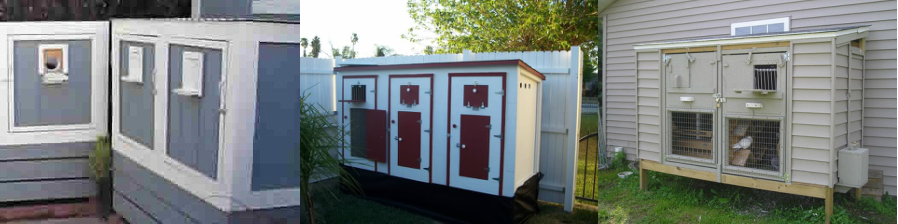
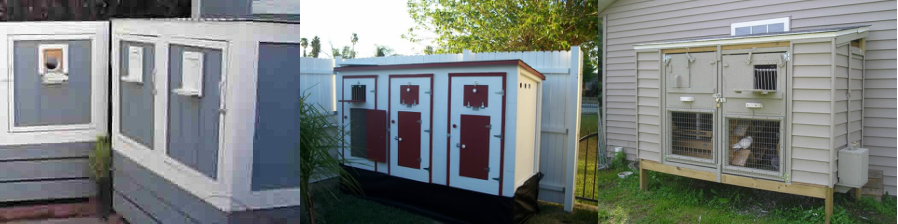
Housing your Rollers will be your first priority if you have decided on this breed. You will need to build several compartments, or cages, for each part of your program. You can divide raising Rollers into an assembly line of sorts: you’ll need separation pens, a breeding pen, and kit boxes. With all housing compartments, it is important to observe the following rules vigorously: Keep water available and clean at all time. Water for breeders should always be available. For competition birds, some schools of thought argue that it is not necessary to keep water in the compartment all the time, as pigeons can be conditioned to the availability of water. Whatever your choice, stick to it. Water is one of the best conductors of disease in a loft. Provide feed that is clean, dry, and free from vermin contamination, mold or dust. Keep the loft or compartment as dry as possible. Install exhaust fans if necessary. Provide adequate ventilation. Use wire bottoms. Clean the loft regularly. Do not let droppings accumulate. With wire bottoms, the droppings have a lesser chance of allowing the spread of disease in case of a breakout.
Separation Pens
As the name implies, these pens are typically used to separate out the sexes. You have to decide, depending on your region of the country, what time of year is best for breeding. During the rest of the year, you’ll keep the pairs separated so they don’t continually produce young and wear themselves out. And given the opportunity, pigeons will breed year-round. Sometimes a breeder will have only one separation pen to house hens and use the breeding pen as the separation pen for the cocks.
Breeding Pen
During the time of year you have designated to let the pairs breed, the breeding pen will be where they reproduce. A typical breeding pen will have in it nesting boxes. Each pair will own a nest box where they will lay eggs and rear their young. Sometimes a breeding pen is separated out into individual breeding compartments. This is done to insure that only one cock topped one female and that no other genes were inadvertently introduced.
Kit Boxes
For competition, it is necessary to house your competition birds together, as a team. You train them on how to leave and return to their kit box. A typical kit box houses about 20-24 birds. As long as each bird has a perch, they are happy and stress free. It is important to build the boxes keeping in mind that they are a kind of runway from where your birds are launched. What this means is that you have to provide clearance for your birds to leave and return to the kit box. Point the box toward free space or remove shrubs or any obstacles directly in front of the opening from which the birds are released.

 and then