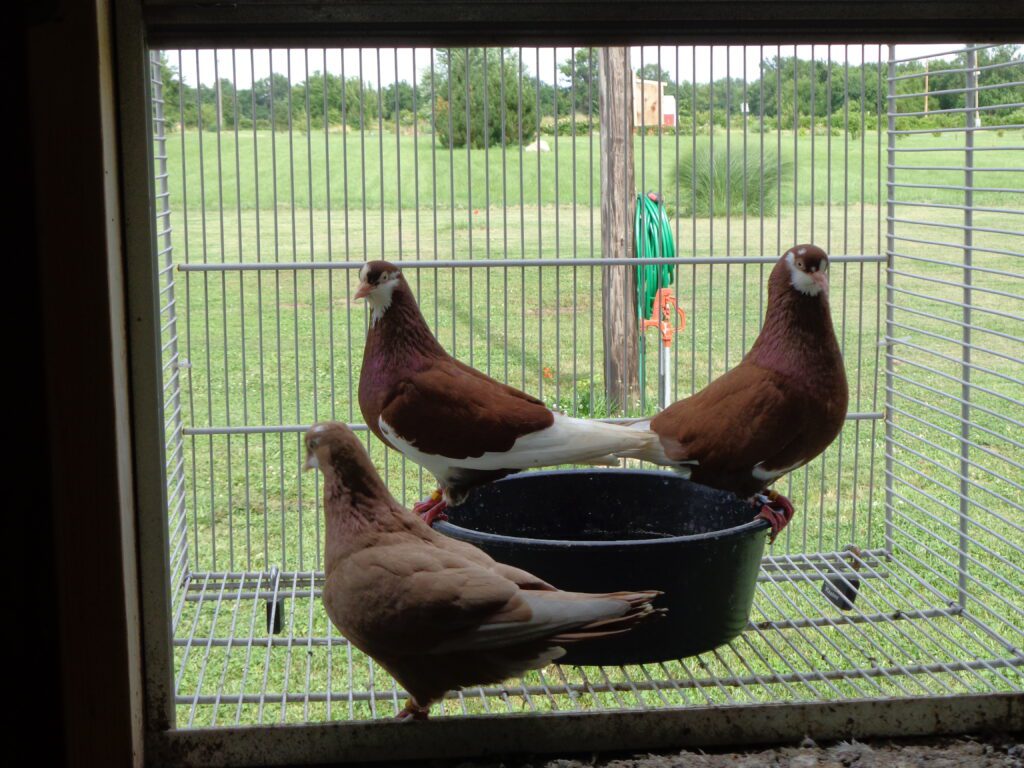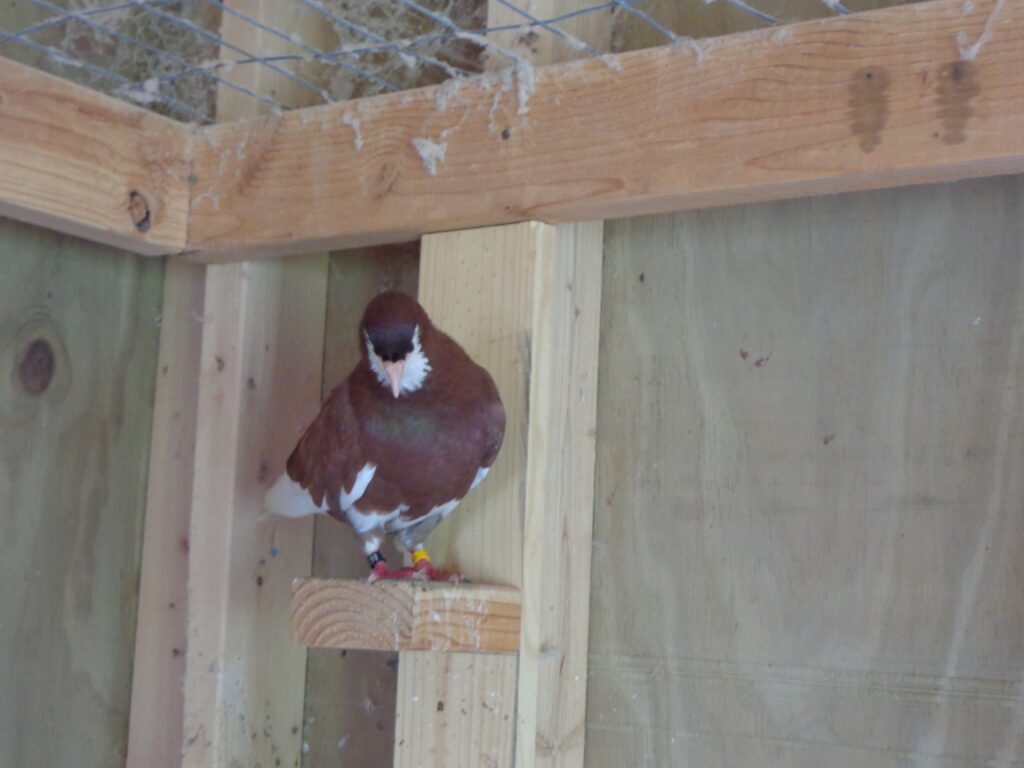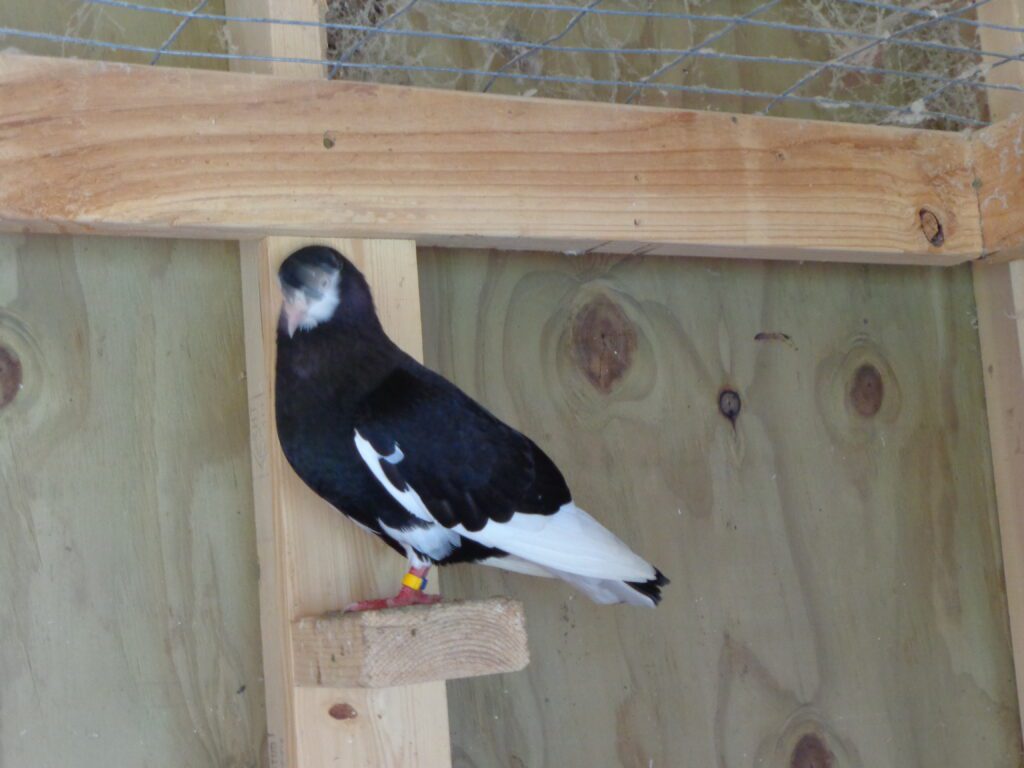
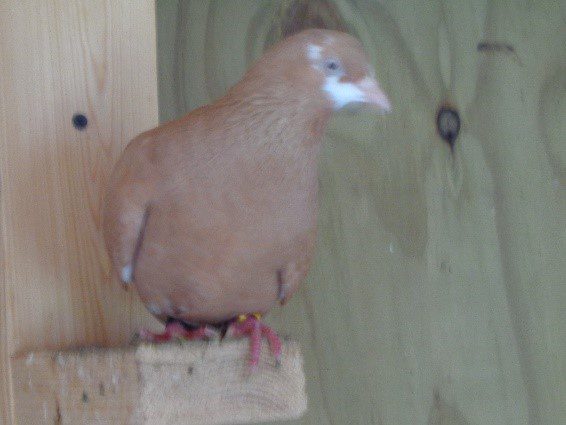
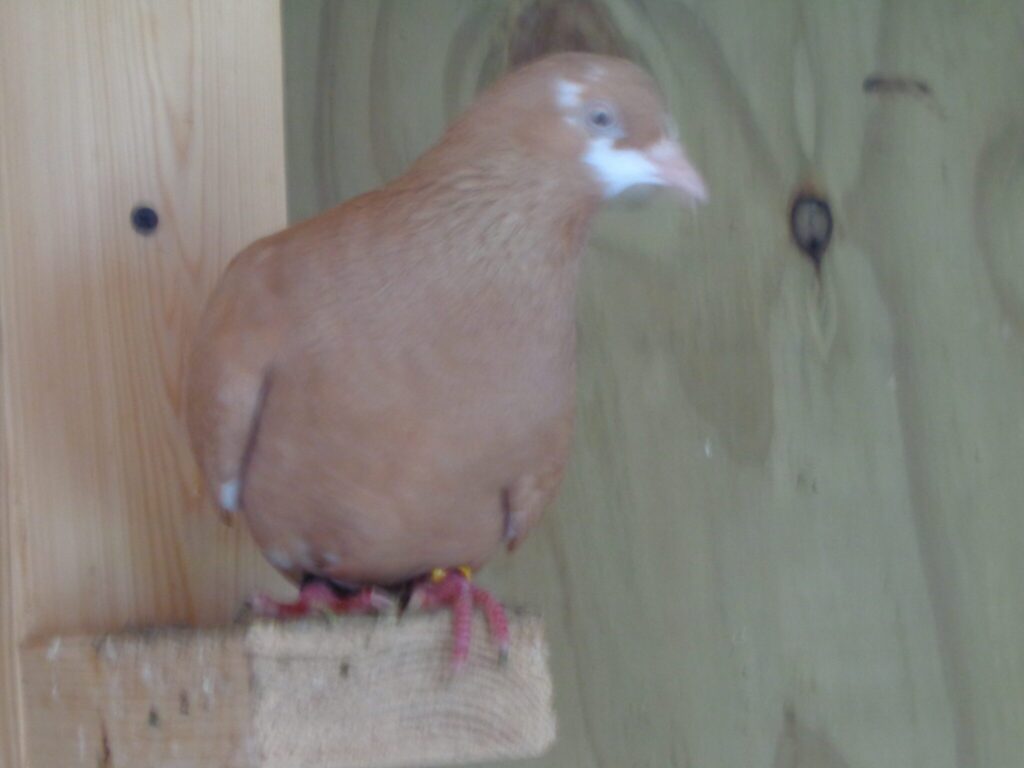
This family is an enigma. Frank Mosca, pigeon geneticist has been helping study them as this family is all Badges in Black, Red and Yellow. While in Rhode Island there were both Selfs and Badges but the last 50 years this family was bred as Badges only.
The problem is the fact that there are only three colors. In theory mating a yellow to black produces a dun and yet this does not happen in this family. The thought was that the yellows were actually genetically “pale” and not dilute, however the yellows are born with incredibly short down so are believed to be dilute. Which brings us back to the problem of mating a yellow to a black does not produce any other color. Ray reported that occasionally an “off color” would hatch but he never kept those as the originals he obtained had only the three colors. Hopefully we can set up tests to determine how a family can be just these three colors which seems to break the rules of pigeon genetics.
As for the Badge vs Self, Mark notes that there is a lot of variation in the badges and some have mixed flights and colored tails. As the numbers increase he hopes to create a flock of Selfs.
Despite having been inbred since some time in the early 1920s, this family of Casperson remains viable and healthy. They are larger and heavier muscled than most modern Rollers. As of this writing three pair of 10 year old birds are mated and producing with no sign of letting up.
The Caspersons retain that high flying trait though the last 50 years they have been bred down from long-flying and usually land around an hour after take-off. They should not be flown with Birminghams long-term as they will pull good-kitting Birminghams too high and teach them bad habits. As the Caspersons are stronger fliers they generally lead the kit and pull them wherever they will.
I like to start the Caspersons with young Birmingham Rollers as they kit well and help keep the young birds together, taking the kit after stray birds and bringing them “back into the kit”. However, as noted they should not be left with the Birmingham Rollers long-term.
While there does not appear to be much interest in the family these days it is interesting to note that some of the “hottest” families that were developed had an infusion of Casperson in their makeup.